Thoughts from Cezanne on painting the same location again and again and again…
I just love Cezanne. Writing to his son in 1906, a few weeks prior to his death, Cezanne wrote the following thoughts on the process of seeing, and the ongoing struggle to replicate the scene and the emotion evoked by repeated study.
I must tell you that as a painter I am becoming more clear-sighted before Nature, but with me the realization of my sensations is always painful. I cannot attain the intensity that is unfolded before my senses. I do not have the magnificent richness of colouring that animates Nature. Here on the banks of the river the motifs multiply…
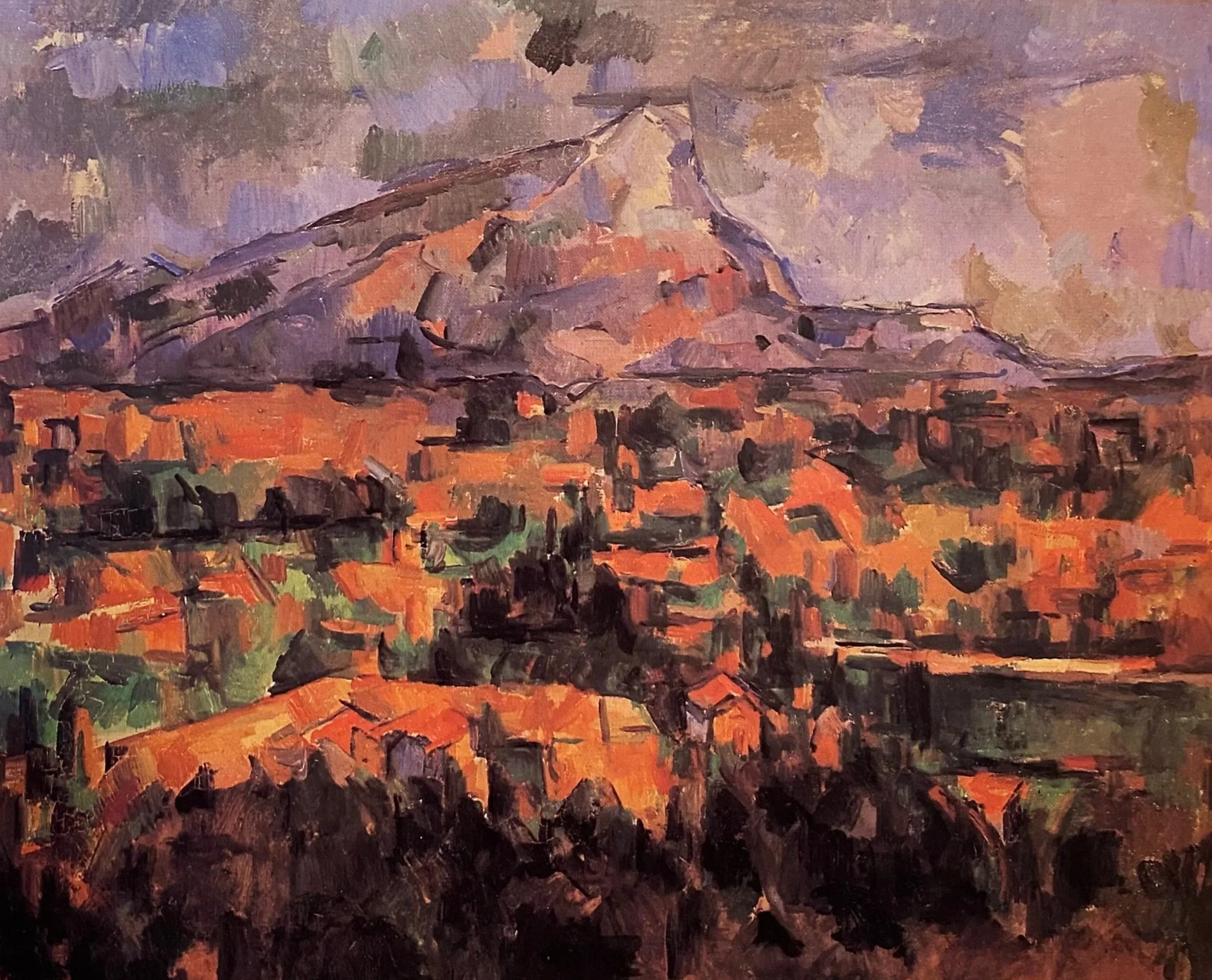
Paul Cezanne, Mont Ste-Victoire, 1904-6, Oil on canvas, 29 × 36”
The view from the terrace of Cezanne’s studio from 1880 to 1906 was dominated by this view of Mont Ste-Victoire. He returned to it as a subject repeatedly, changing his palette and his handling dramatically.
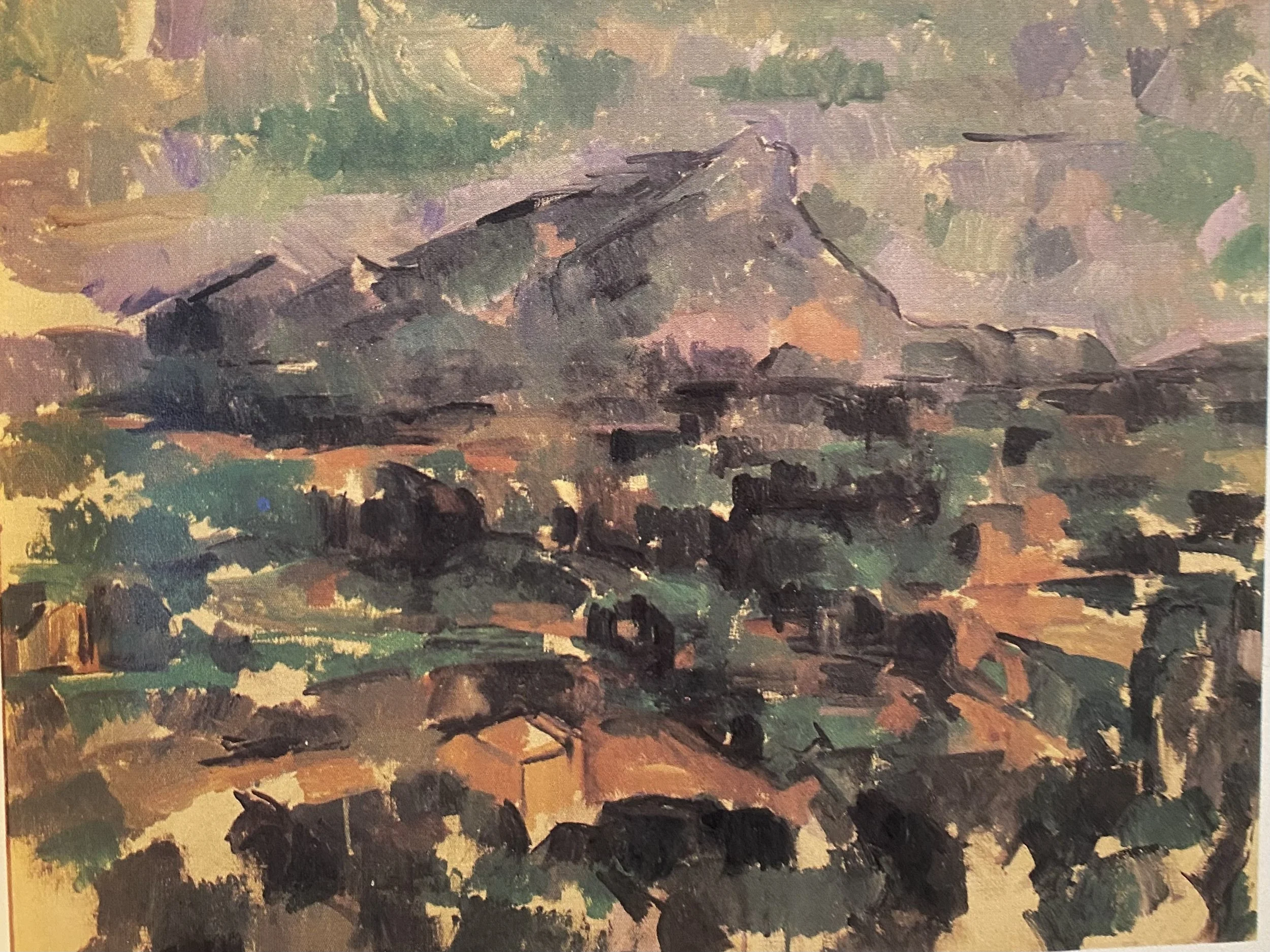
Paul Cezanne, Mont Ste-Victoire, 1906, Oil on canvas, 25 × 32 1/2”
Cezanne famously declared “Painting from Nature is not copying the object; it is realizing one’s sensations.” The emotional turbulence of the top version is dramatic; black and orange masses crowd the foreground until it might be a scene from the apocalypse. Only the tell-tale outline of the famous mountain is unchanged. It feels like a chaotic, dangerous world compared to the second example from 1906, where lavender, light green and dark grey are the colours and the feeling is calm and inviting.
Consider that Cezanne painted this scene over eighty times. It raises the question about what drew him back to this scene over and over again. Was it something as prosaic as the comfort of his studio terrace as a working place? Or was there something specific in the scene itself that drew his obsessive interest in recreating it?
When writing to his son, Cezanne goes on to say this about repetition: “The same subject seen from a different angle gives a motif of the highest interest, and so varied that I think I could be occupied for months without changing my place - simply bending a little more to the right or left.”
There is a hill in Northumberland County near Garden Hill that I am drawn to in a similar way.
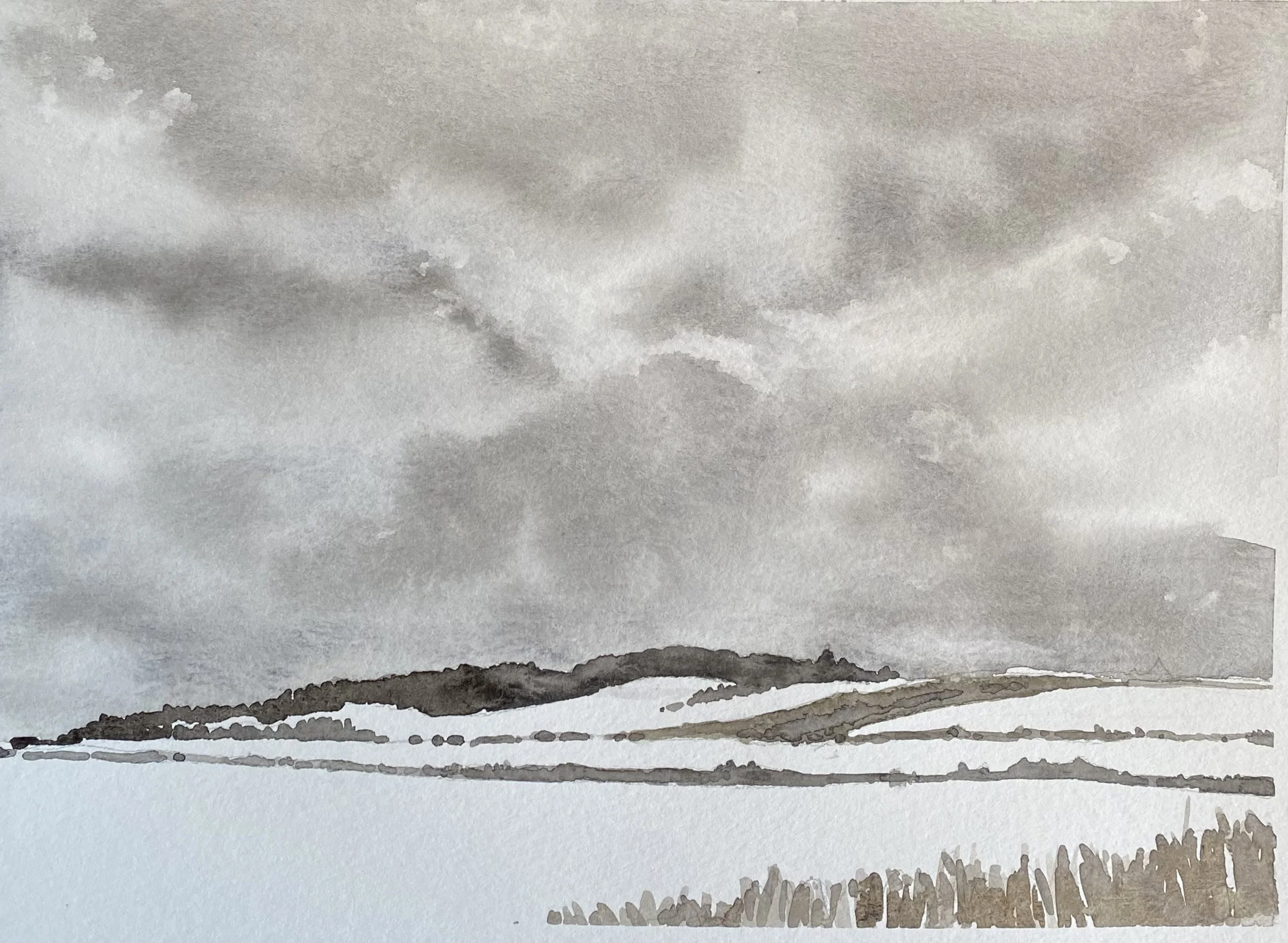
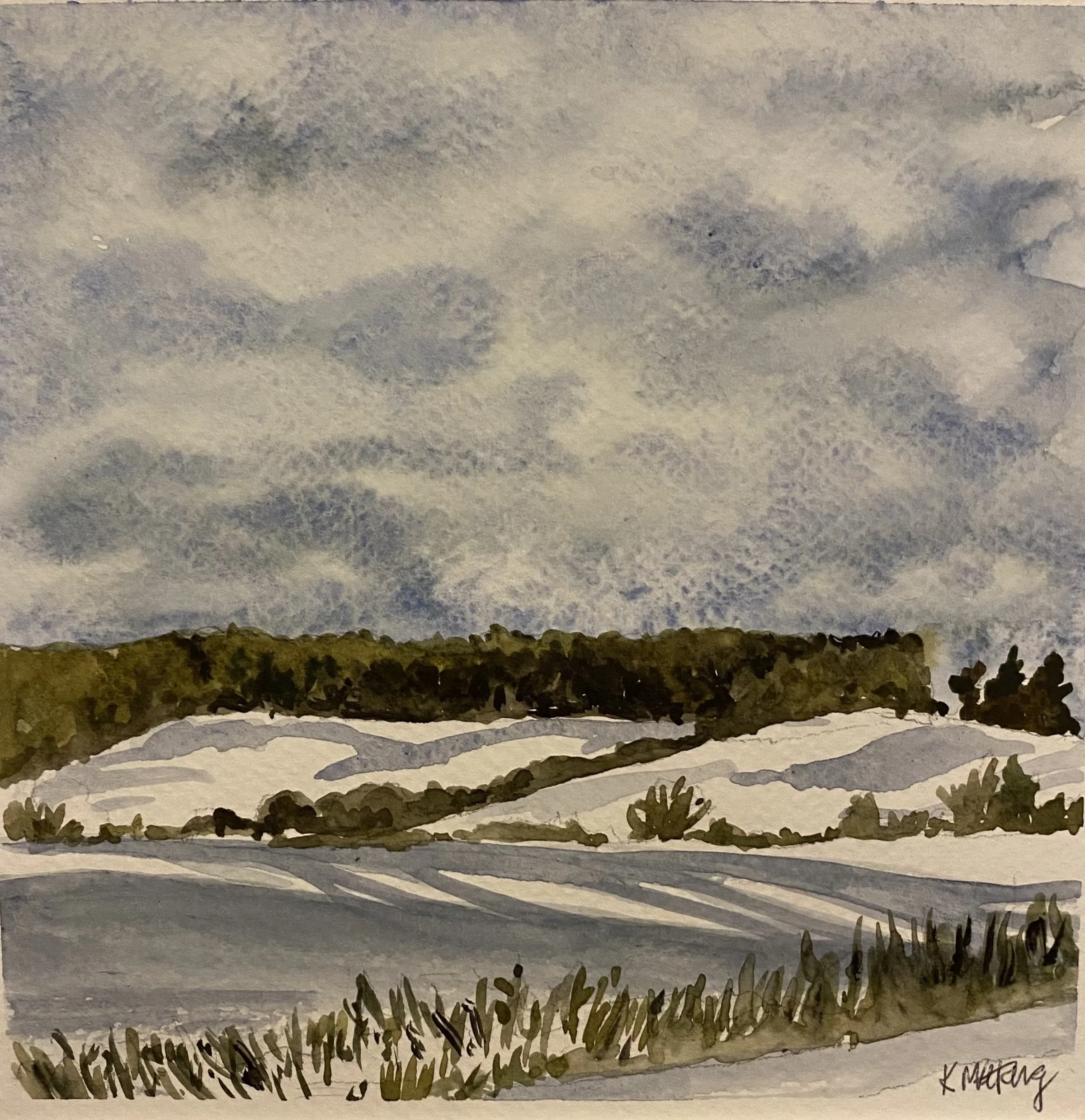
Katherine McHarg, Snow, 2026, Watercolour on paper, 9 × 12”
I am fascinated by the topography of this particular stretch of fields along this ridge. The lines of the forest along the eastern side march up the hill and wrap back around, creating a contained space. Somehow the fields always seem to be planted with different crops, so that in the summer and autumn green is juxtaposed with yellow canola and the faded light brown of drying corn. Even covered in snow, I can’t look away. The number of times I’ve driven by this hill and had to pull over to try and capture it are too numerous to mention.
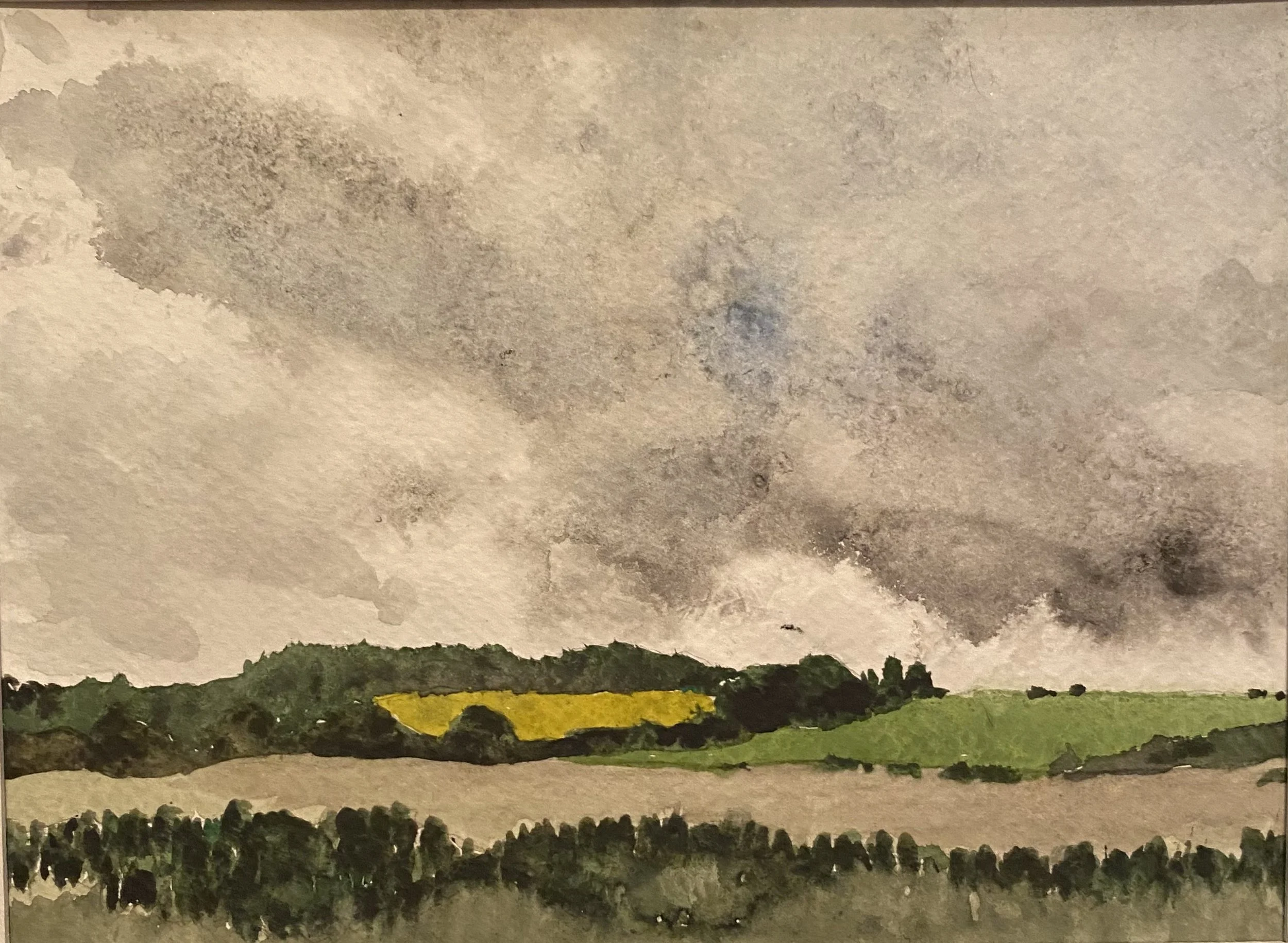
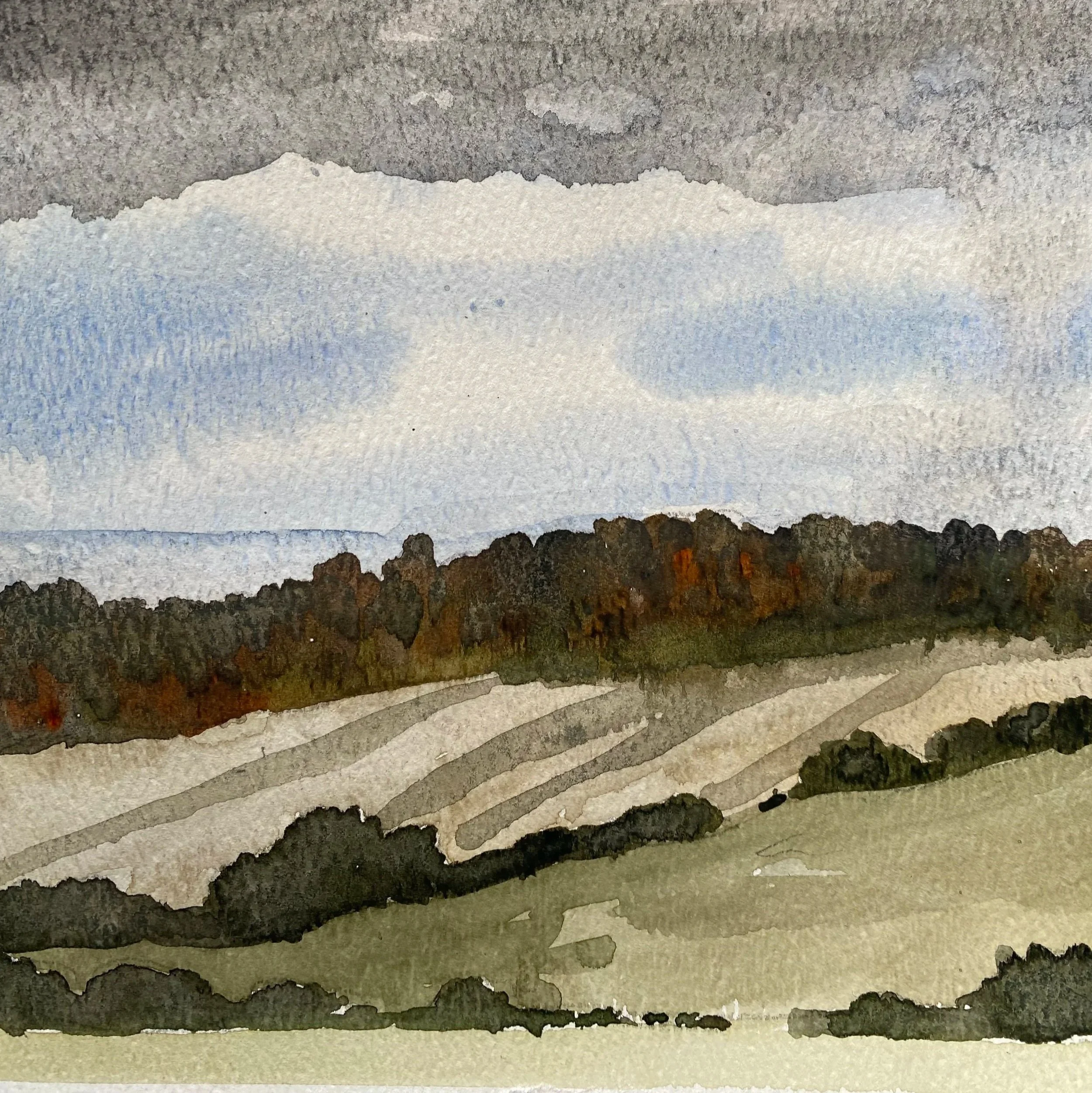
Katherine McHarg, Rolling Fields, 2025, Watercolour on Paper, 7 × 9”
I just find it the most fascinating stretch of landscape. I love painting this hill.
Katherine McHarg, Highway 10 Hills, 2025, Watercolour on Paper, 8 × 8”
Why this one place? What is it that is so interesting? The striking composition that is formed by that patch of trees fencing in the eastern field just gets me every time, and from different angles too.
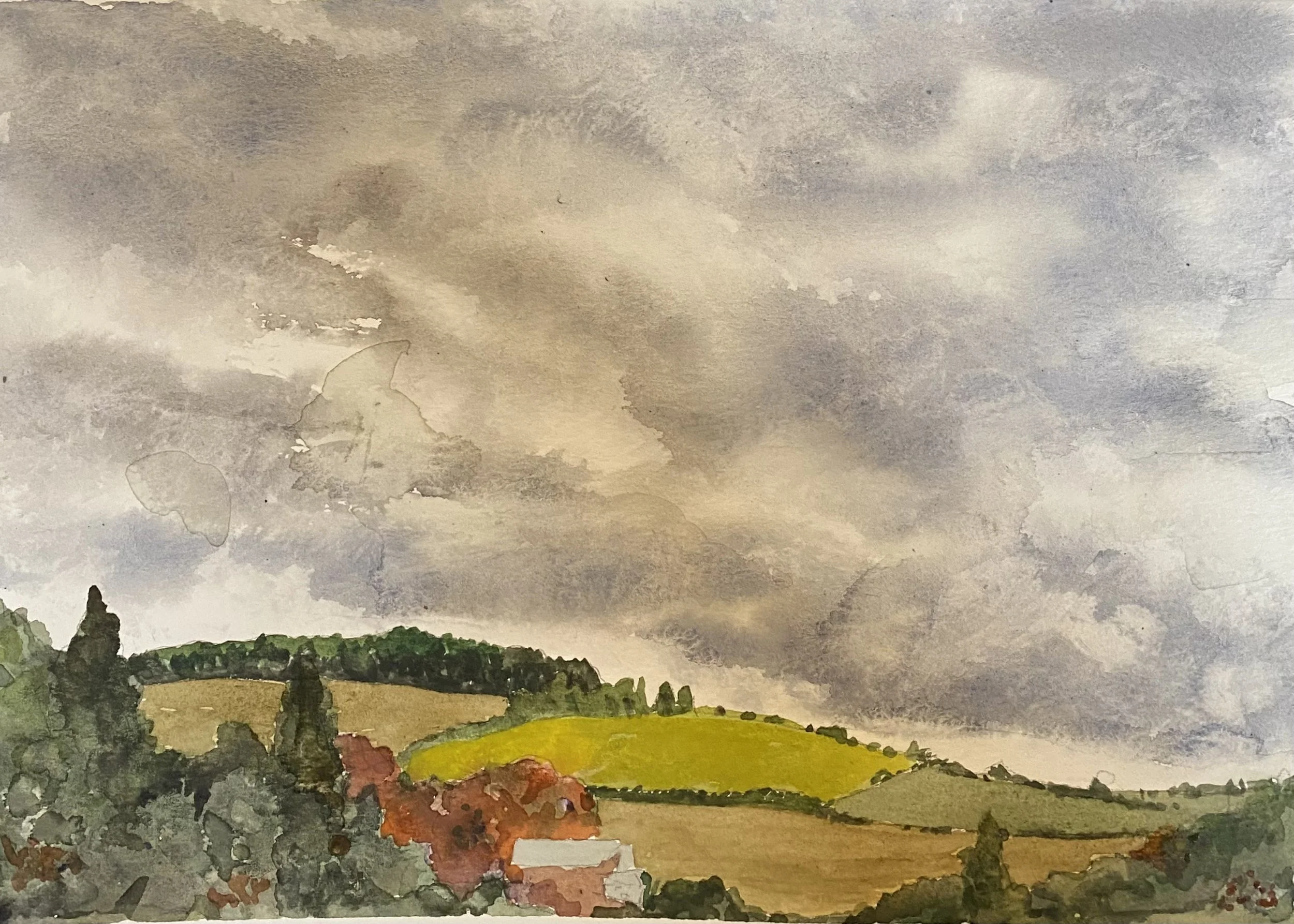
Katherine McHarg, Autumn in Garden Hill, 2026, Watercolour on Paper, 9 × 12”
I love the idea of Cezanne writing about staying in the same location, and simply tilting his head a few degrees in either direction to create entirely new worlds of interest and discovery. I feel almost guilty about returning to this hill over and over again, like it’s cheating to paint a scene so beautifully composed and delineated.
Detail from rough study
