The Elusive Words of Turner
I’ve always loved Turner.
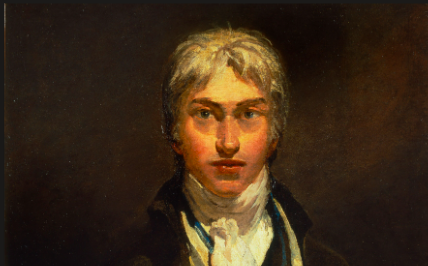
Self Portrait at 23
When you go to the Tate, and you see the rooms of Turner pushing the concept of a landscape masterpiece further and further into modernist abstraction, pushing the act of looking at a painting into something else, you can’t help but realize this was a massive voice in painting. The tormented skies curling in on themselves like a great block-printed wave, the insistence on yellow and mist, cloud, steam, vapour, the vistas and heroic mountains suggest the sublime.
And I’ve read my Edmund Burke.
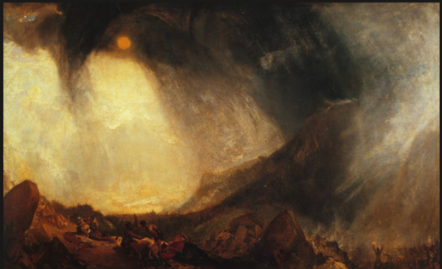
Snowstorm - Hannibal and his army crossing the Alps, 1812
Then I started to paint landscapes in Haliburton, noticing unreal shapes, unbelievable colour, and above all, turbulence and motion.
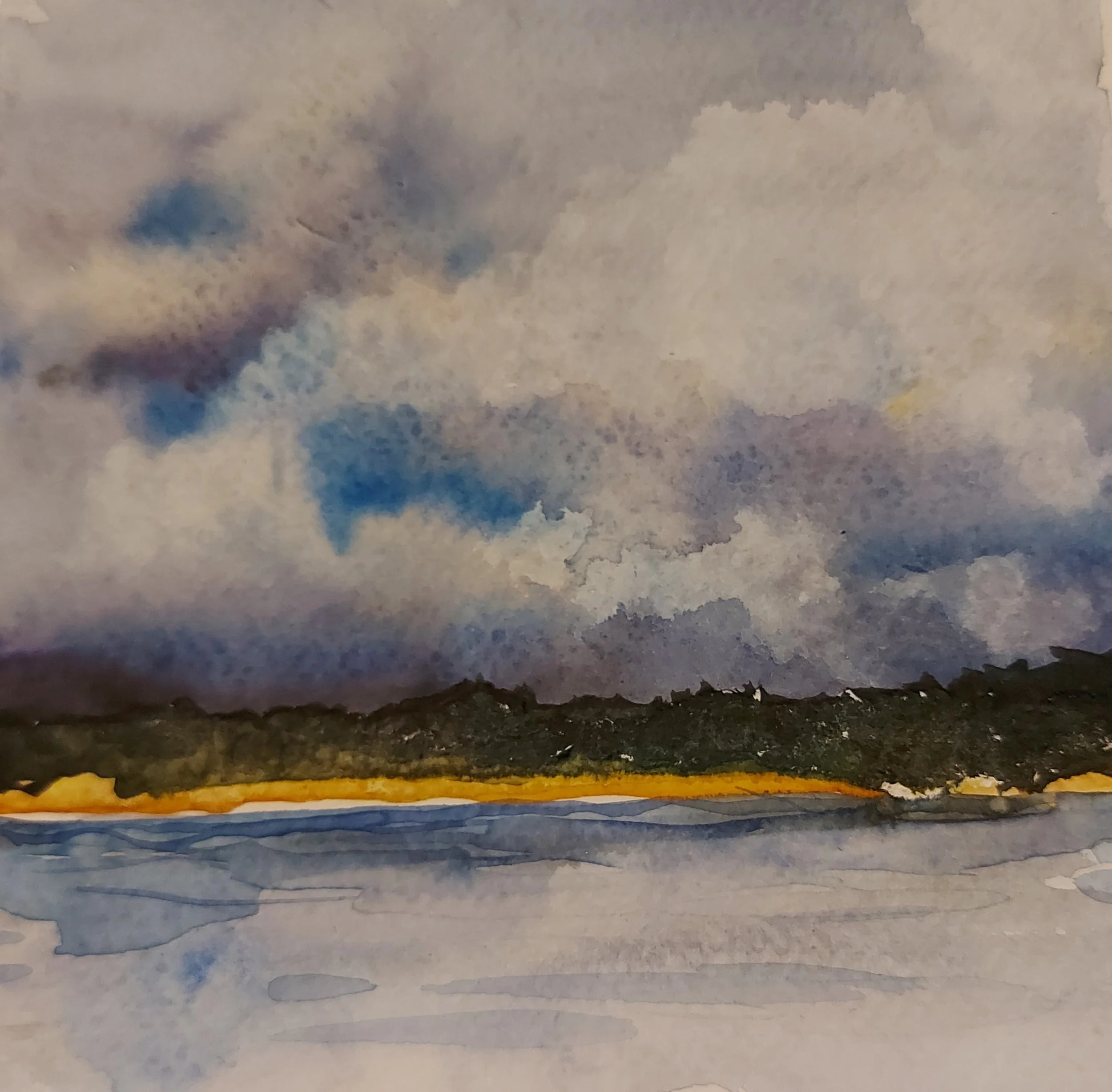
This was my first watercolour attempt in 2022.
People would say to me, oh you must love Turner, and of course, I certainly and sincerely do.
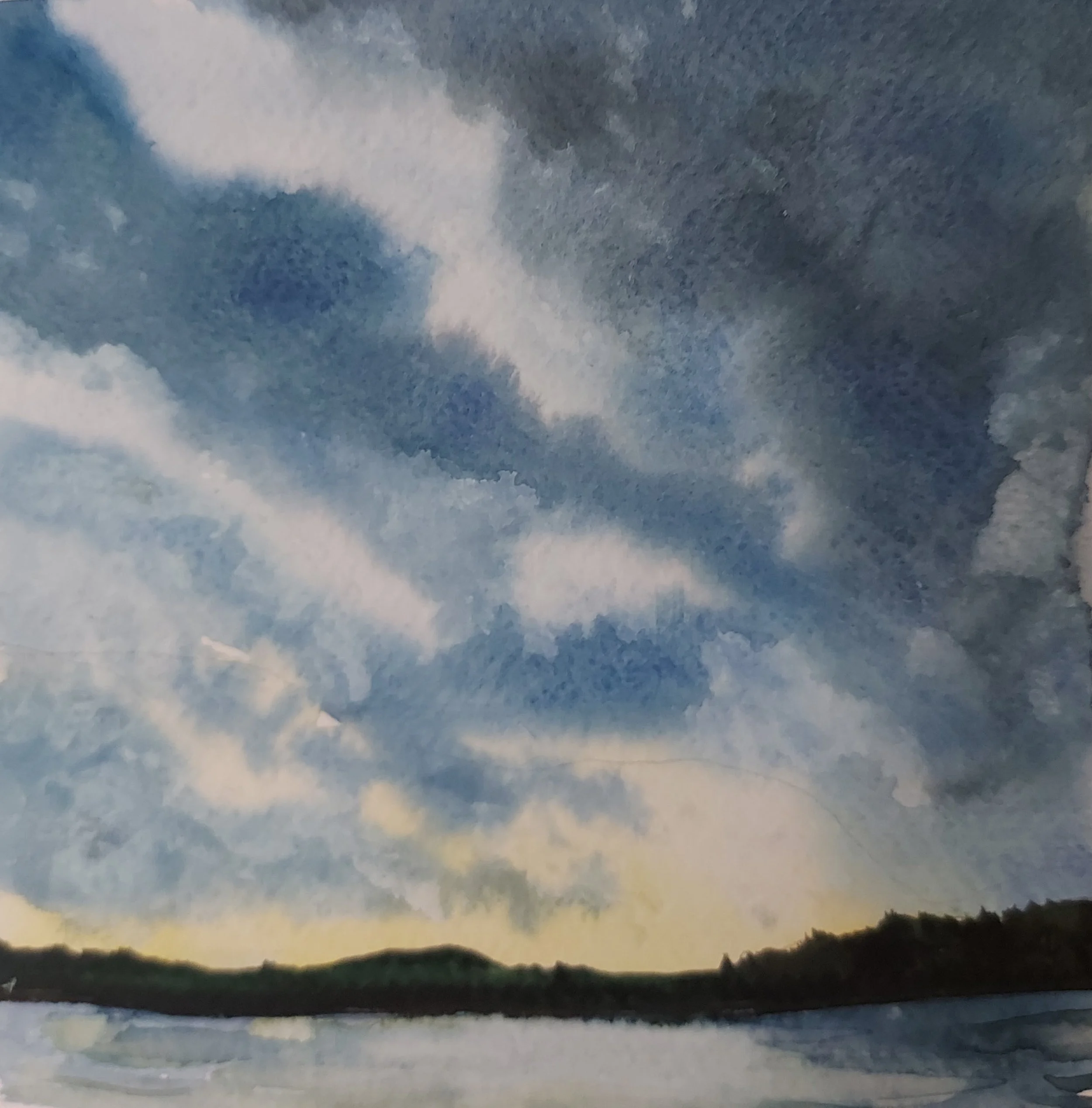
Just a typical Haliburton sky in 2022
So imagine my surprise when I went to research some juicy words from the master himself. What would he say about his process for the edification of the generations to come? And believe me, this was something Turner would have considered.
He left a collection of 350 finished paintings and 20,000 watercolours and drawings to his country, with the express desire that a gallery be constructed to house them together. Turner wanted the work to speak for itself through massed groupings of work that would reveal his development, experiments, and mastery.
I assumed there would be diaries, written correspondence, journals and copious notes from Turner outlining his thought process, his inspirations, even his travel experiences. I wanted to understand the thinking and language Turner would have used to describe these works that had a profound impact on my own painting.
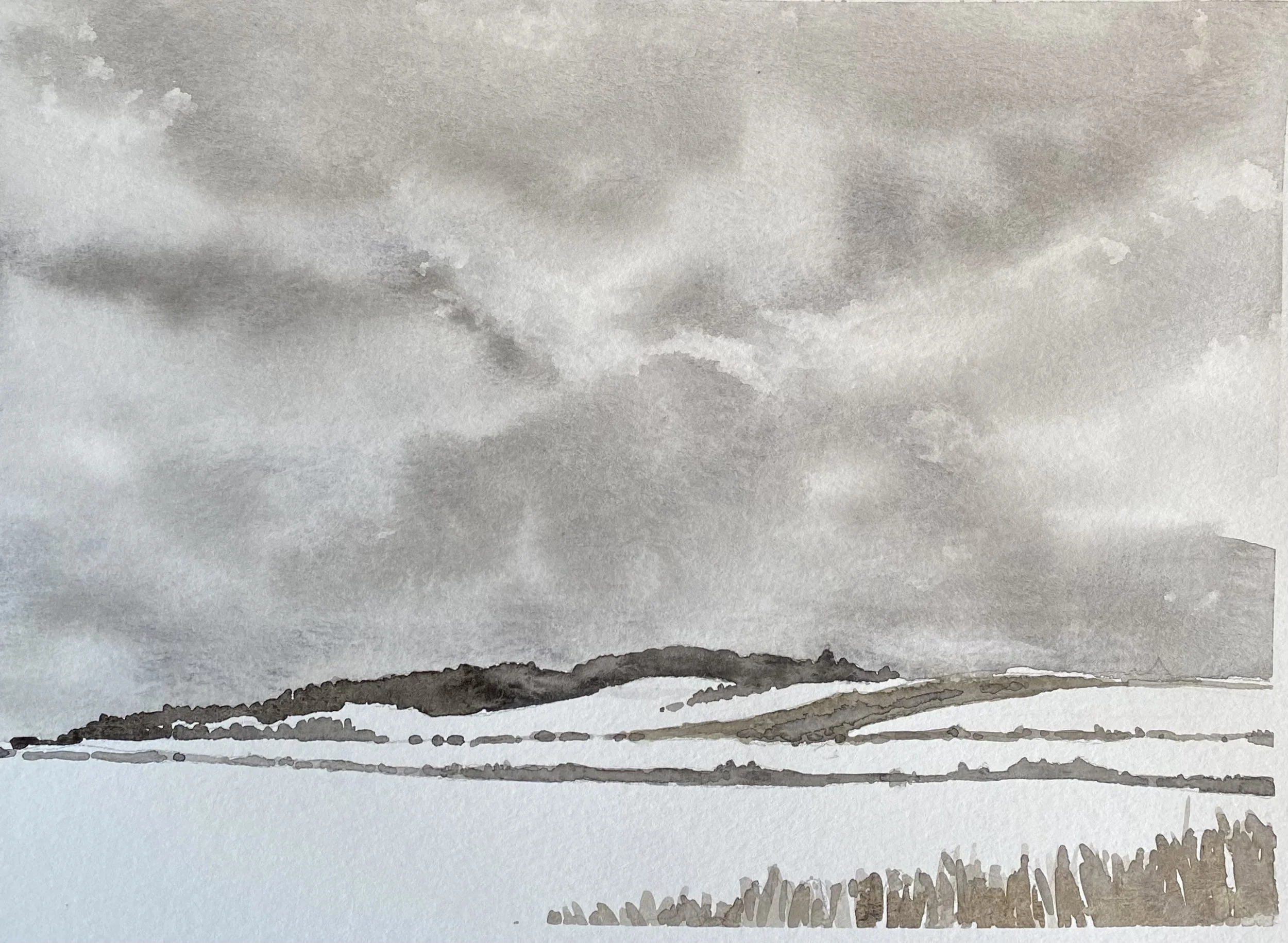
2026 View of Garden Hill
But no. There are short fragments from his lectures, a poem he wrote to accompany a piece (!!), multitudes of existing poems he quoted to attach to his epic work, and a few very brief quotes people remembered and repeated.
But not a lot of statements, no manifesto aside from the pithy “The Sun is god” or “True rules are the means, nature the end.”
While dining with the Ruskins, who were lifelong supporters of his later work, he dismissed the ‘soapsuds and whitewash’ criticism of Snowstorm - steam-boat off a harbour’s mouth making signals in shallow water, and going by the lead thus: “Soapsuds and whitewash? What would they have? I wonder what the sea’s like? I wish they’d been in it.” Not a lover of criticism, was Turner.
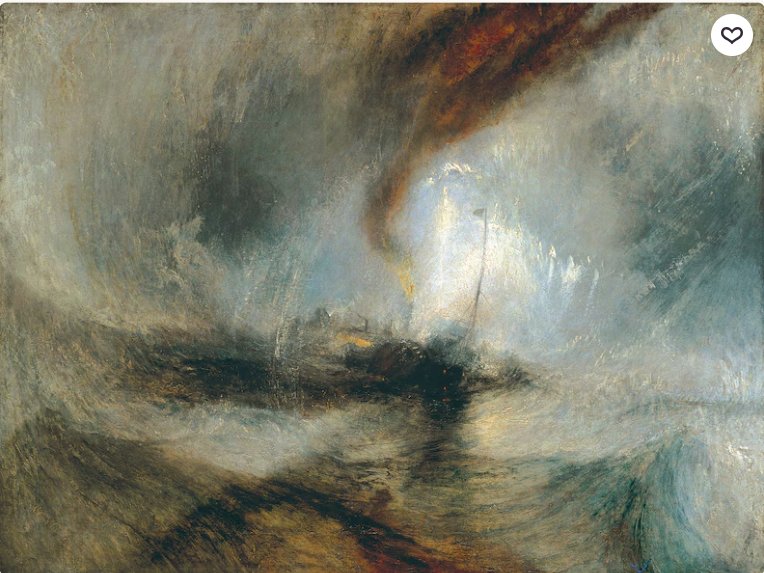
Turner’s Snowstorm - Steamboat off a harbour’s mouth making signals in shallow water…
When teaching perspective, he raised eyebrows by refusing to teach it as an isolated field, insisting on combining it with art history and technical painting issues. He defended the importance of knowing the rules of perspective in one of the few long quotes recorded:
However arduous, however depressing the subject may prove; however trite, complex or indefinite.. However trammeled with the turgid and too often repelling recurrence of mechanical rules, yet those duties must be pursued and although they have not the charms or wear the same flattering habiliments of taste as Painting, Sculpture, or Architecture, yet they are to the full as useful and perhaps more so for without the aid of Perspective, Art totters on its very foundation.
Turner spoke about the art created by other masters (for that is certainly what he knew himself to be), and these comments, often given in the lecture hall, were recorded. When lecturing on landscape, Turner had this to say of Rembrandt and his ‘objectionable forms’,
Over each he has thrown that veil of matchless colour, that lucid interval of morning dawn and dewy light on which the eye dwells so completely enthralled… as it were thinks it a sacrilege to pierce the mystic shell of colour in search of form.
And then goes on to paint Rembrandt’s Daughter, which instantly sold to be added to the collection of Farnley Hall estate.
Turner’s Rembrandt’s Daughter
Turner’s critical notes on Poussin’s Deluge are equally detailed.
Let us consider a picture where she (Nature) has ceased to place a barrier to the overwhelming waters of the Deluge swamping and bearing only one tone, the residue of Earthy matter… For its colour it is admirable, impressive, awfully appropriate, just fitted to every imaginative conjecture of such an event… Deficient in every requisite of line so ably displayed in his other work, inconsistent in the colouring of the figures, for they are positively red, blue and yellow, while the sick and wan sun is not allowed to shed one ray but Tears.
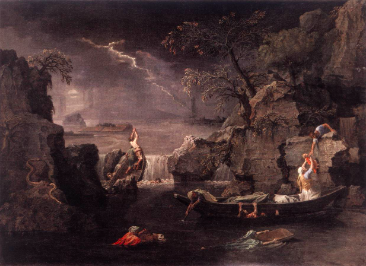
Poussin’s Winter (The Deluge)
Aside from notes from the lecture hall, there don’t seem to be many letters among friends, supporters, students, or colleagues. Comments are remembered and passed on. Turner’s confident reply when Peace - Burial at Sea was criticised by Stanfield as having sails that were too black was allegedly “I only wish I had any colour to make them blacker”.
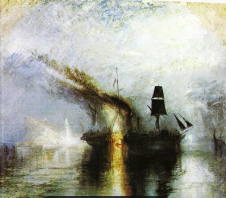
Peace - Burial at Sea
When the Reverend Kingsley told Turner that his mother had had a similar experience at sea to Snowstorm - steamboat off a harbour’s mouth making signals in shallow water, and going by the lead (the soapsuds painting referenced above) and supposedly understood this painting, he answered
I did not paint it to be understood, but wished to show what such a scene was like. I got the sailors to lash me to the mast to observe it; I was lashed for four hours, and I did not expect to escape, but I felt bound to record it, if I did. But no one had any right to like the picture.
These comments show Turner’s quick dismissal of any input into his work. He isn’t painting to be liked or to express something easily grasped, but rather to make the viewer experience a visual experience with an emotional impact, through his mastery with colour and light. And let us never forget, the rules of perspective and form.
